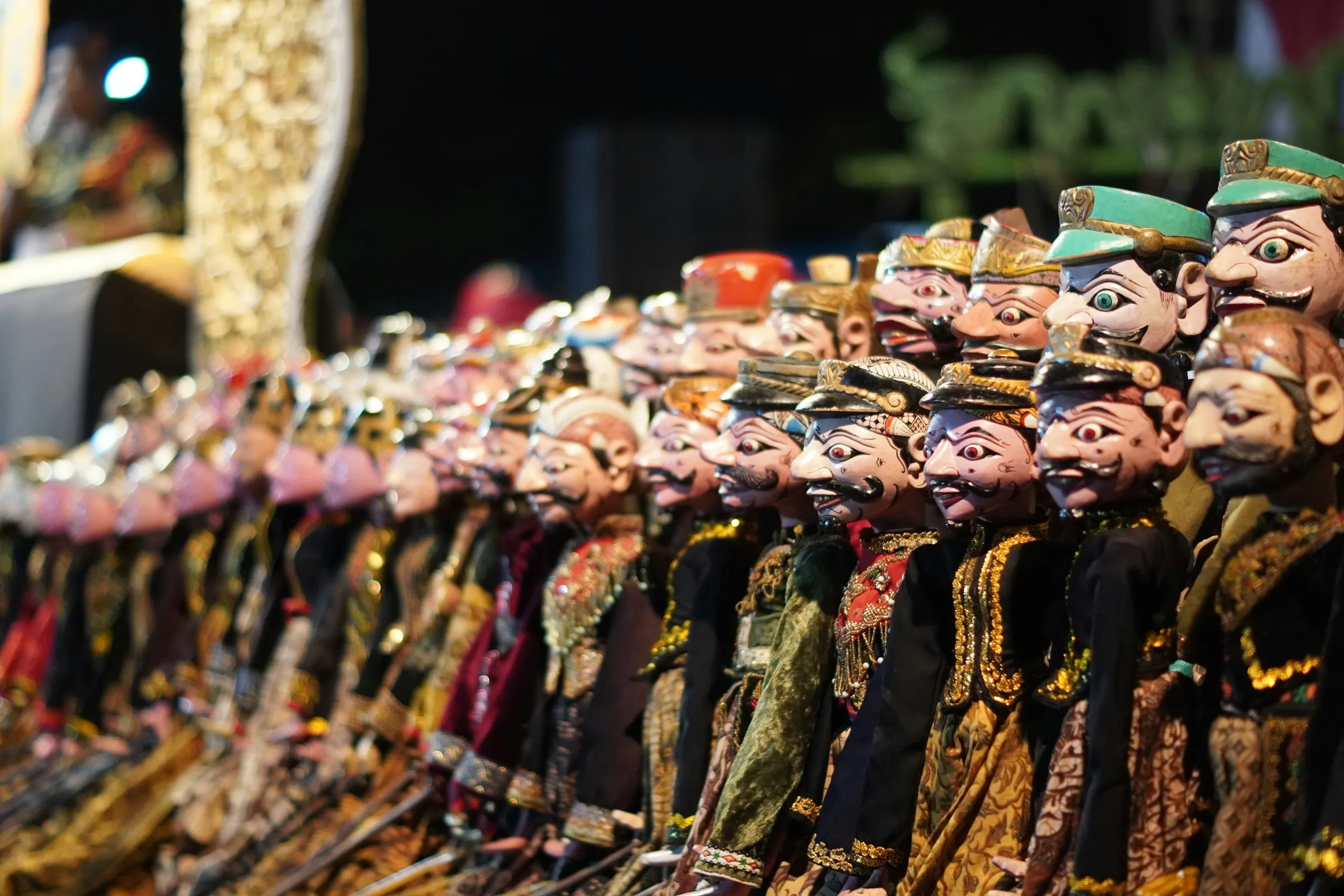
Wayang Golek
Wayang golek is the Sundanese counterpart to the Javanese wayang kulit. Where wayang kulit plays as shadow behind a screen, wayang golek performs in three dimensions — a carved wooden puppet that can be turned, gestured, and shown directly to an audience.
Each puppet is carved from a single block of wood, its face shaped to express character: a composed king, a resolute warrior, a quick-witted clown. The costumes are sewn from cloth with detail that can rival human dress — complete with miniature crowns, sashes, and jewelry.
A full wayang golek performance, called pakeliran, can run from late afternoon until just before dawn. The dalang performs every character alone, shifting voice and intonation for each figure, while the nayaga accompanies on Sundanese gamelan — lighter and more buoyant in character than its Javanese counterpart.
The puppet most people know is Cepot, a punakawan figure with a red face, round nose, and irreverent personality who serves as the show’s social critic — landing observations about power and pretense through jokes that make the audience laugh before they realize they’ve been told the truth.