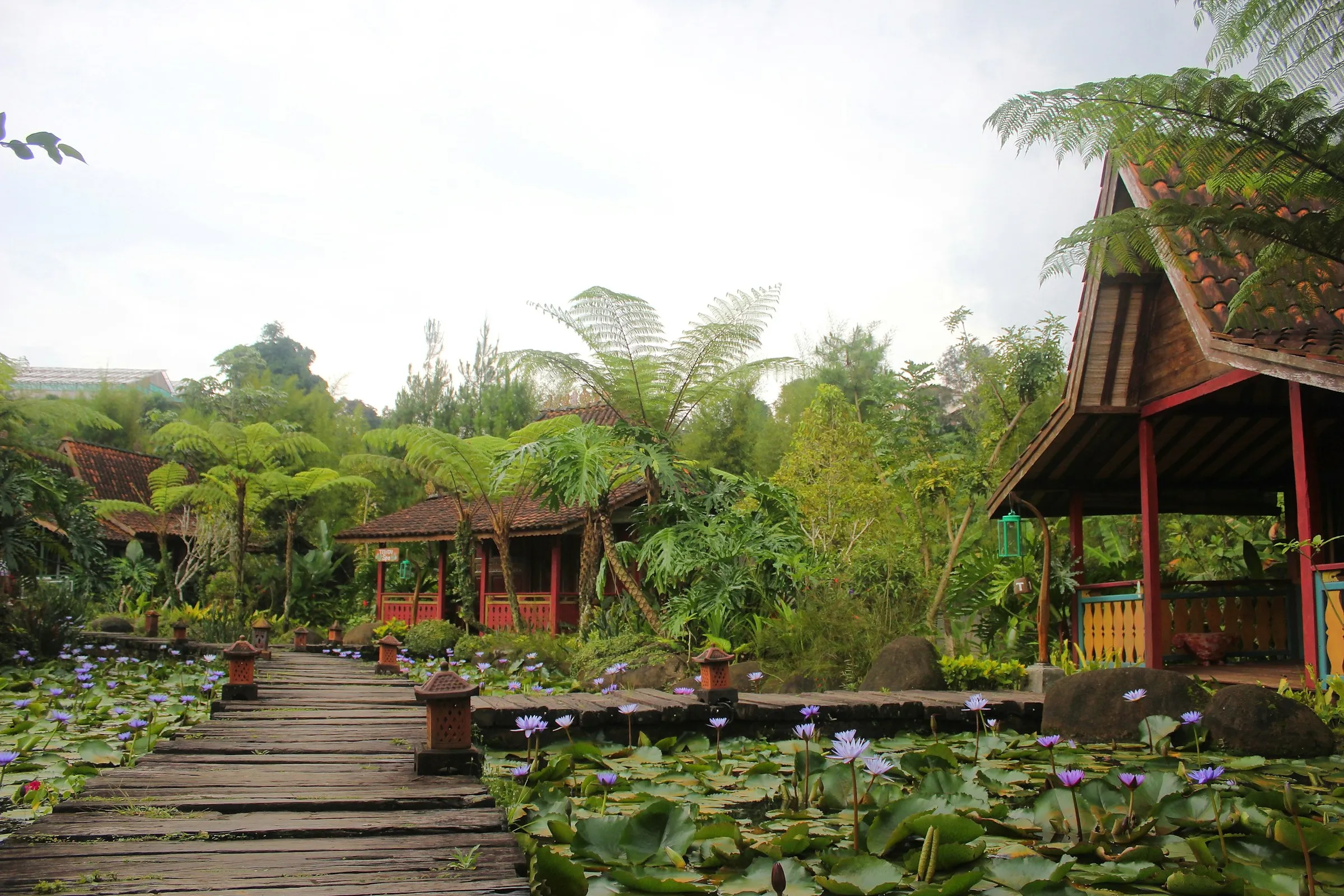
Joglo
The joglo is the highest expression of Javanese timber architecture. The structure rests on four main pillars called saka guru, which support a stacked roof without a single nail — every joint uses wooden pegs and precision-cut mortise-and-tenon connections passed down through generations.
A joglo is not just a house. It encodes Javanese cosmology in its proportions: the four saka guru represent the cardinal directions, the layered tumpang roof symbolizes spiritual planes. The space beneath the high central roof is the pendopo, an open hall used for ceremonies, gatherings, and receiving guests.
The carpenters who fully understand this building science are increasingly rare. Meanwhile, old joglo houses in rural Java are being dismantled and sold — often trucked to Bali to be reassembled as resort lobbies and boutique hotels. The structure survives, but removed from the village and the family it was built for, it becomes something else entirely.