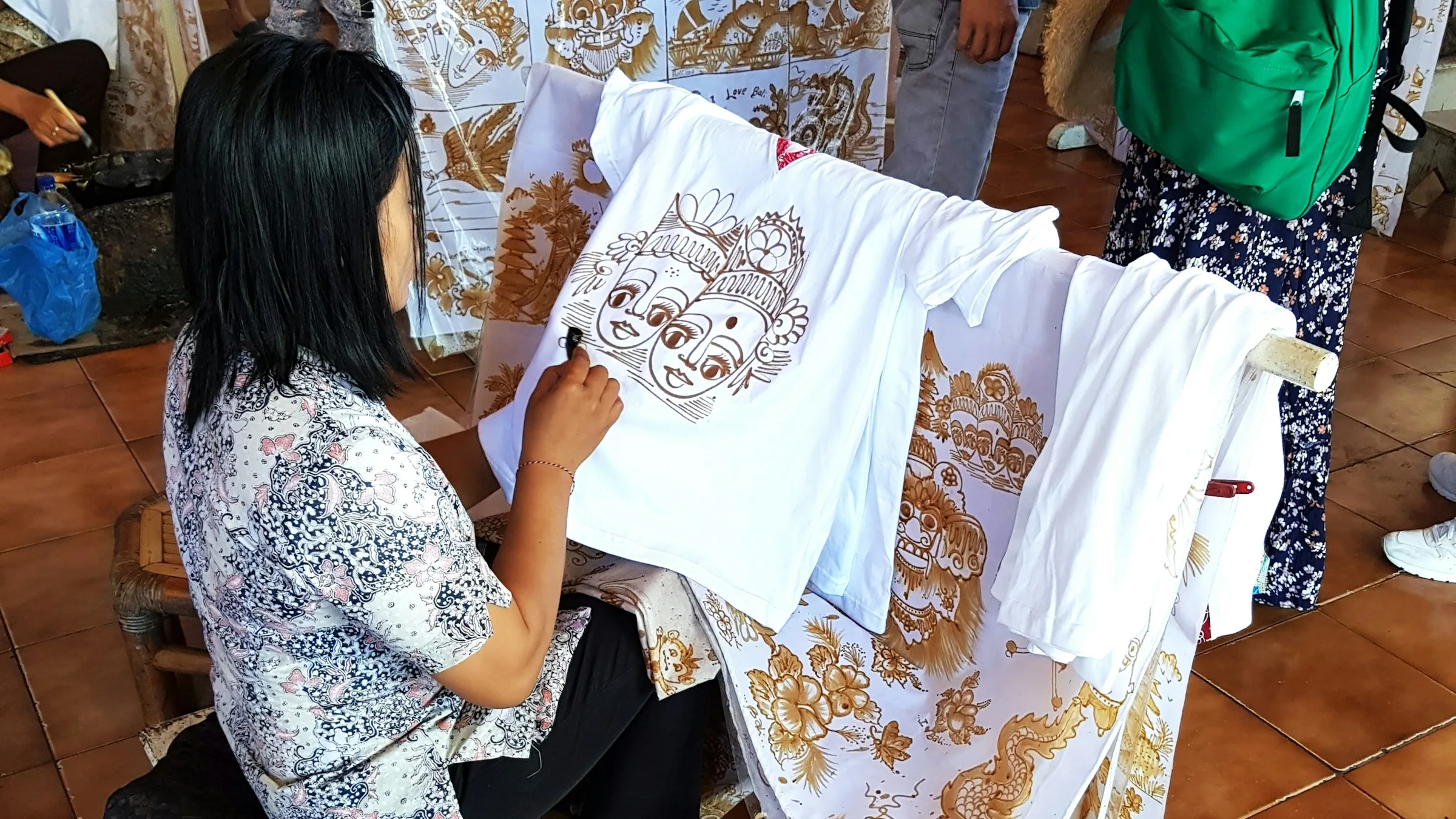
Hand-Drawn Batik
Batik tulis is the oldest form of Indonesian batik. Each length of cloth is worked entirely by hand with a canting — a small tool with a copper spout that holds hot wax. An experienced maker can spend weeks or months finishing a single cloth, depending on the complexity of the motif.
Unlike stamped batik (batik cap) or printed batik, hand-drawn batik never produces two identical pieces. Every line carries the hand of the person who drew it. The wax resists dye where it falls, so the pattern emerges through a cycle of waxing, dyeing, and boiling — sometimes repeated a dozen times for a single cloth with multiple colors.
The centers of production stretch across Java’s north coast and interior, each with distinct palettes and motifs. Pekalongan favors bright colors and floral designs shaped by Chinese and Dutch colonial influence. Solo and Yogyakarta work in the soga brown and indigo palette of the court tradition. Lasem is known for its deep red, made from mengkudu root. The differences are legible to anyone who knows what to look for.