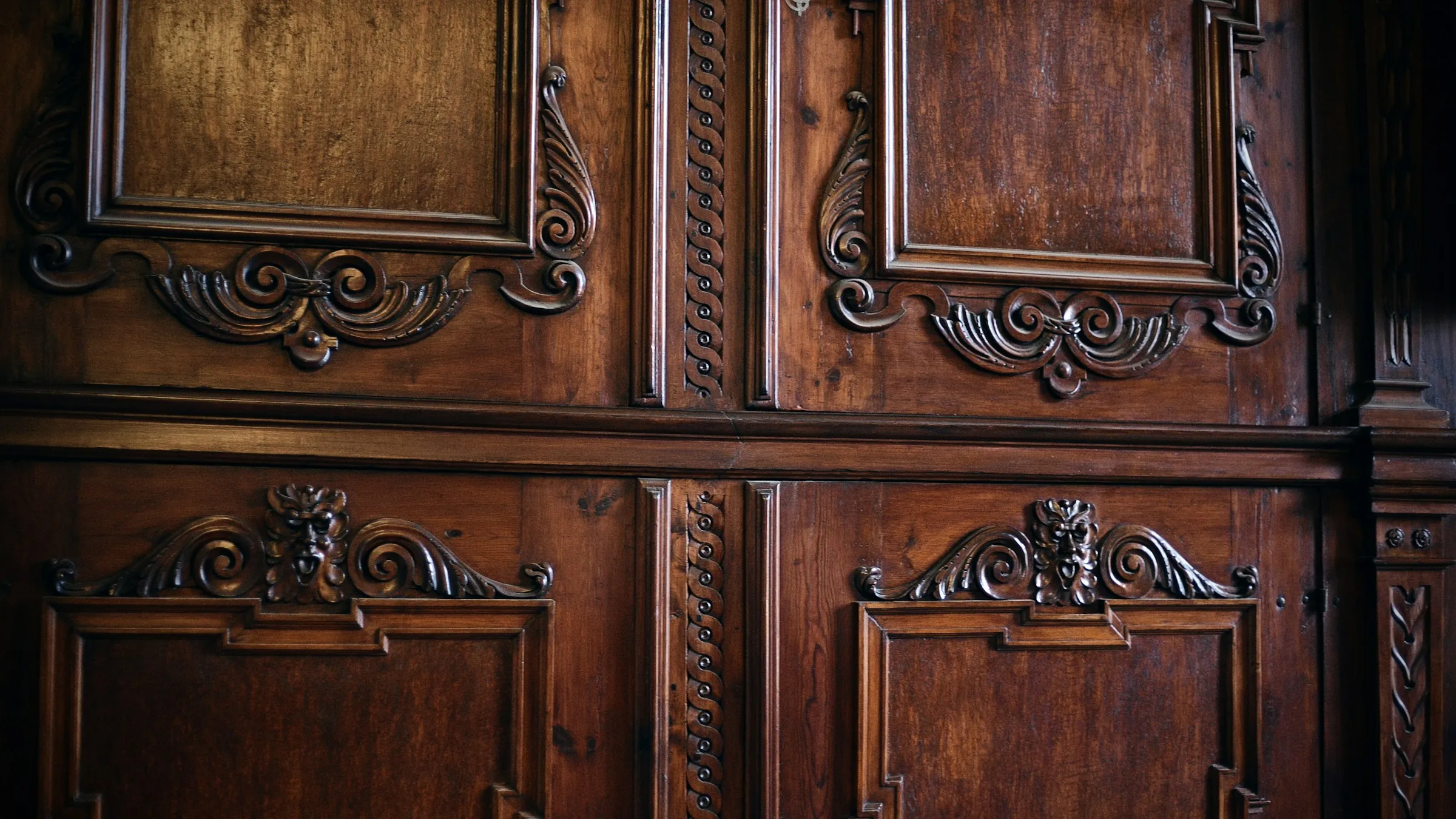
Jepara Wood Carving
Jepara has been known as a center of wood carving since the sixteenth century. The tradition was brought to European attention by R.A. Kartini, who introduced Jepara carvings abroad, and to this day the small town on Java’s north coast remains the hub of Indonesia’s carved furniture industry.
What sets Jepara carving apart from woodwork elsewhere in the archipelago is the fineness of its detail — vine scrolls, flowers, and leaves that flow as though growing from the wood itself. The best carvers work freehand, following the grain and adjusting the design as the wood dictates.
The furniture industry in Jepara is still alive, which makes this craft an outlier among Indonesian traditions. But volume and quality pull in opposite directions. CNC routers now reproduce patterns that once required years of training to execute by hand. The carvers who work at the highest level of the traditional craft — capable of producing the deep, layered relief that made Jepara’s reputation — are a shrinking subset of the town’s workforce.