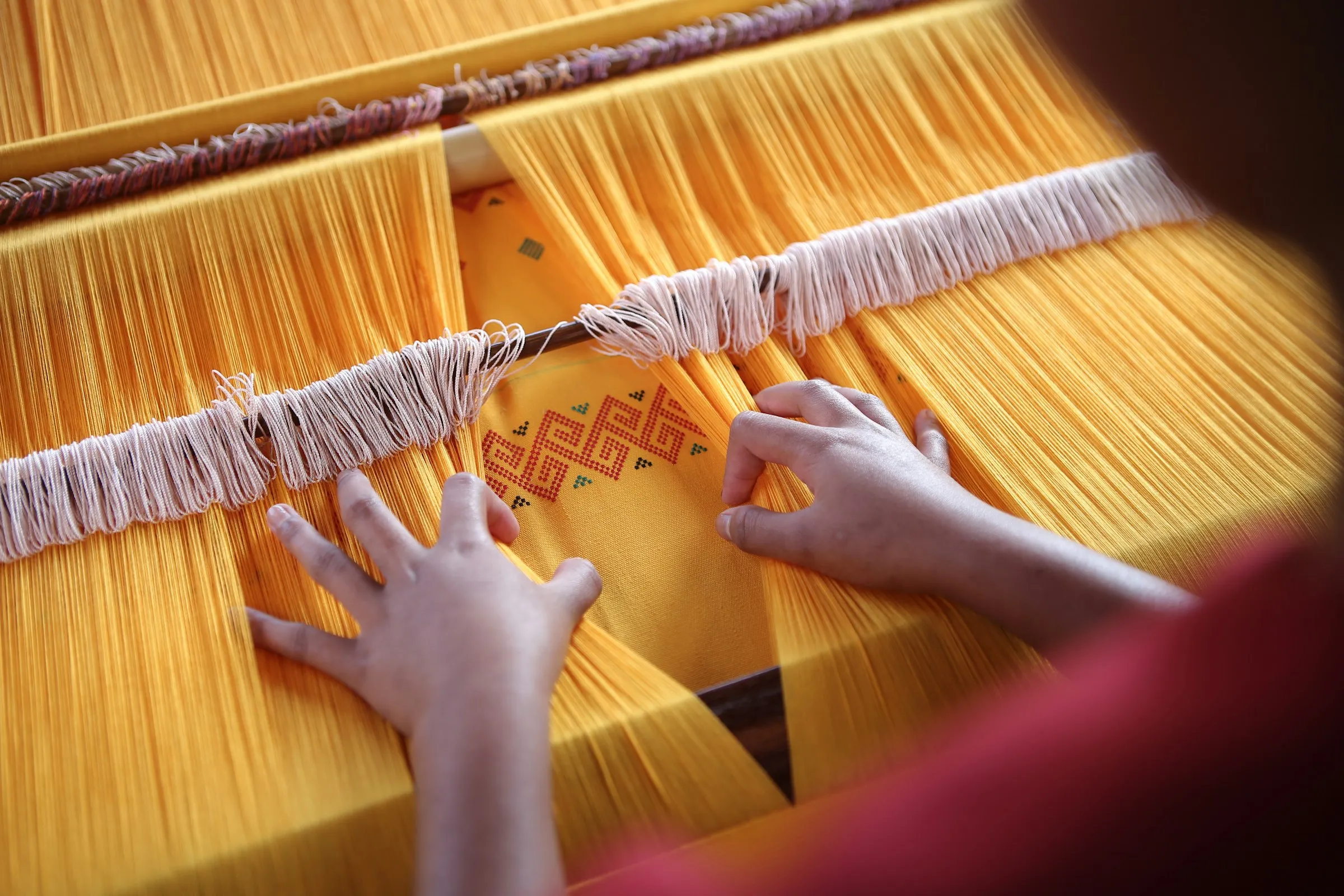
Ikat Weaving
Ikat is one of the oldest textile techniques in the Indonesian archipelago. The pattern is not painted or printed onto finished cloth. It already exists in the threads before the fabric is woven — formed through a precise process of binding and dyeing that demands exact calculation.
In Sumba, ikat cloth is not simply clothing. It marks clan identity, serves as bride price, and wraps the dead for burial. A single cloth can take a woman a full year to complete, working through cycles of binding, dyeing with indigo and morinda, and weaving on a backstrap loom tensioned against her own body.
Tenganan in Bali produces geringsing — one of only three double-ikat traditions in the world, where both warp and weft threads are bound and dyed before weaving. The village guards the technique closely. The other two double-ikat traditions are in Gujarat, India and Okinawa, Japan.