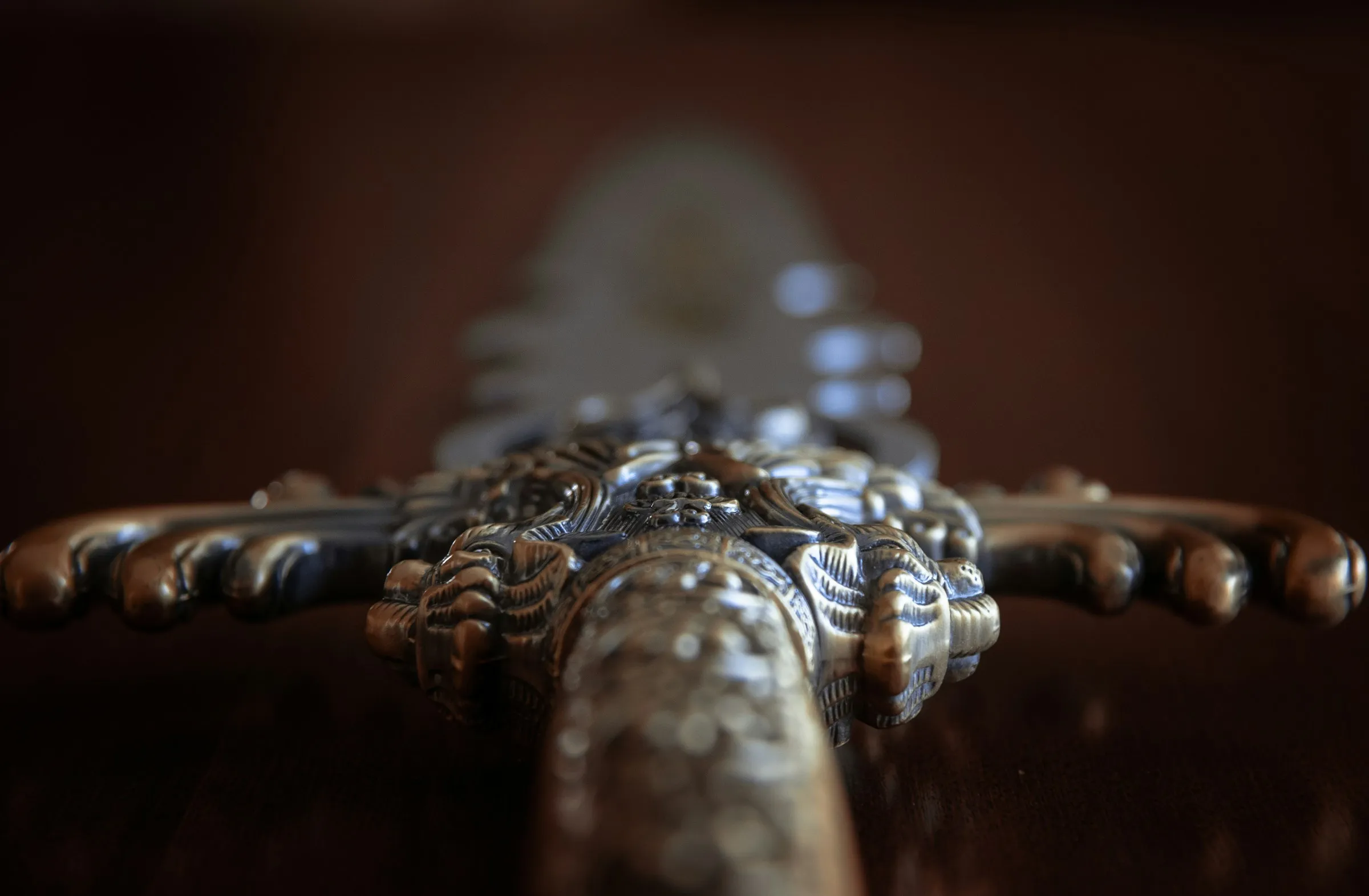
Keris
A keris is not simply a weapon. In Javanese tradition it is a pusaka — an heirloom of spiritual weight that represents its owner’s identity. The smith who makes one, called an empu, is not an ordinary blacksmith. He must command metallurgy, aesthetics, and the spiritual dimension of his work.
Making a keris involves repeatedly forging layers of iron and steel — sometimes nickel iron from meteorites — until a distinctive pamor pattern emerges in the metal. Each keris has a dhapur (blade form), pamor (metal pattern), and tangguh (regional style of origin) that can be read by those who understand the tradition. A straight blade or one with curves (luk, always odd-numbered) carries different meaning.
The number of empu still actively forging keris can be counted on one hand. The knowledge required — which alloys to combine, how to read the fire, when a blade is spiritually complete — takes decades to acquire and has no textbook.